Reading nook ideas, drawn into the room
Reading nook ideas for a Paris apartment: a window seat, an alcove at the end of a bookcase, or a storage bench, drawn to fit.
Most reading nook ideas online show the finished cushion and skip the decision that makes the seat comfortable for longer than ten minutes: depth. A nook needs somewhere fixed to lean, a back that holds you at an angle, and light that reaches the page without lighting the whole room. In a Paris apartment, three places usually offer it — a tall French window, the end of a bookcase, or a bare metre and a half of wall. The joinery decides which one earns its place.
Depth decides whether the seat gets used
A seat under 45 centimetres deep works for perching, not for reading: legs need somewhere to go, whether stretched along the seat or tucked underneath. For an adult leaning against one arm with a book, 55 to 60 centimetres of depth is closer to right — enough to lie back diagonally rather than sit bolt upright.
The back matters as much as the base. A vertical panel with no give asks a lot of a spine after twenty minutes, so most nooks work better with a bolster, or with a low, angled backrest built into the joinery itself rather than added with cushions afterwards. None of this shows in a photograph, which is exactly why it gets skipped.
A window seat under a tall French window
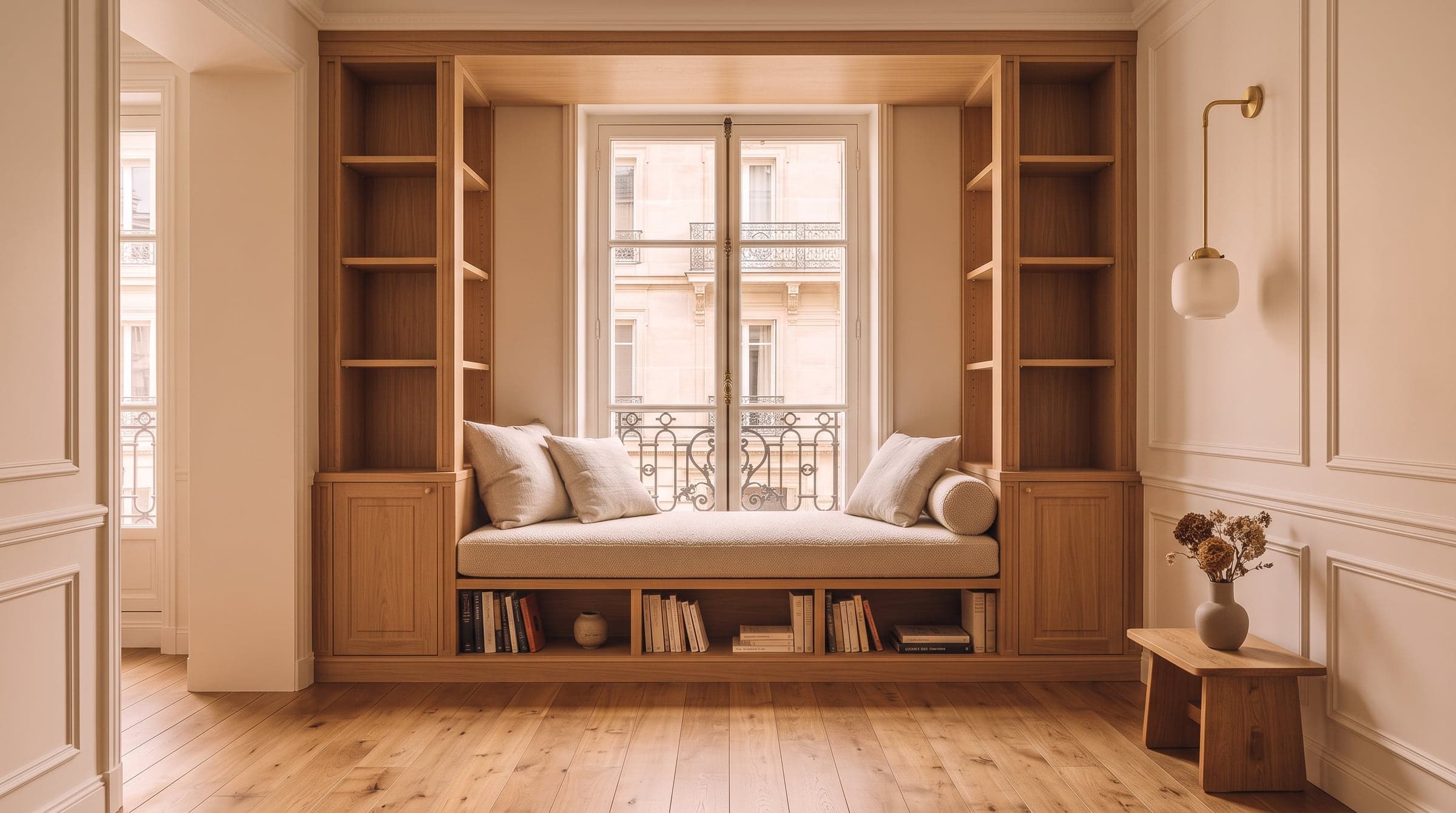
The tall French windows of a Haussmann apartment give a window seat its best site: the light falls straight down onto the page for most of the day, and the deep reveal below the window already suggests the width of a seat. Building the bench flush with the wall, with the top set just below the sill, keeps the glazing and the ironwork visible rather than boxed in.
Some corner buildings, especially those built around the turn of the century, have a shallow bay rather than a flat window, and a bay window seat makes the most of the extra depth, wrapping around two or three sides instead of one. The proportions still have to be drawn rather than assumed: a curved or angled bay rarely gives the same depth all the way along, so the seat's height and front edge have to follow the wall rather than a straight line.
A radiator often sits exactly where the seat wants to go. Moving it, or drawing the seat around it, is a detail settled at the drawing stage — not something to solve on site.
A reading nook is a decision about depth, not a cushion thrown into a corner.
An alcove at the end of a bookcase
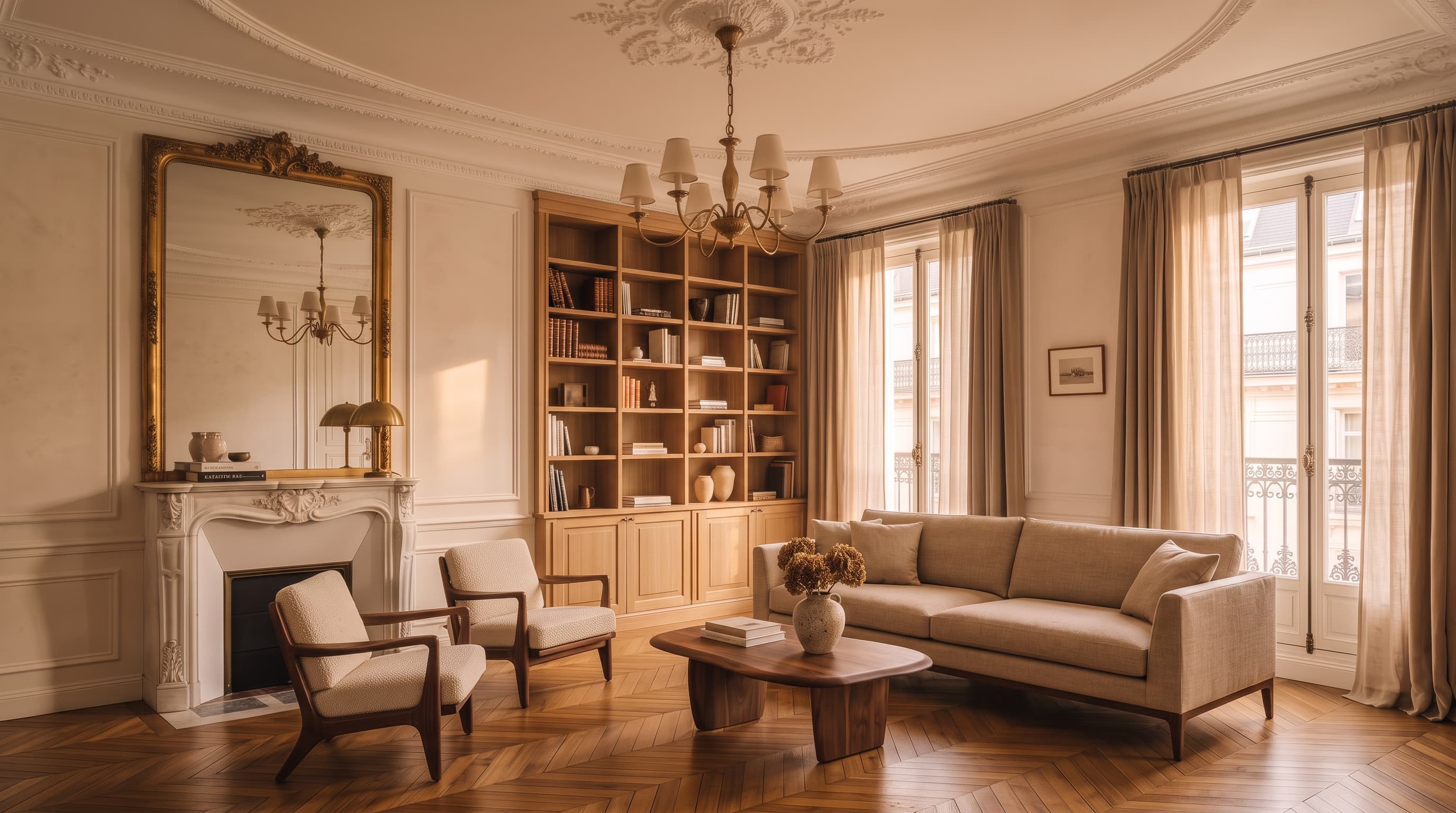
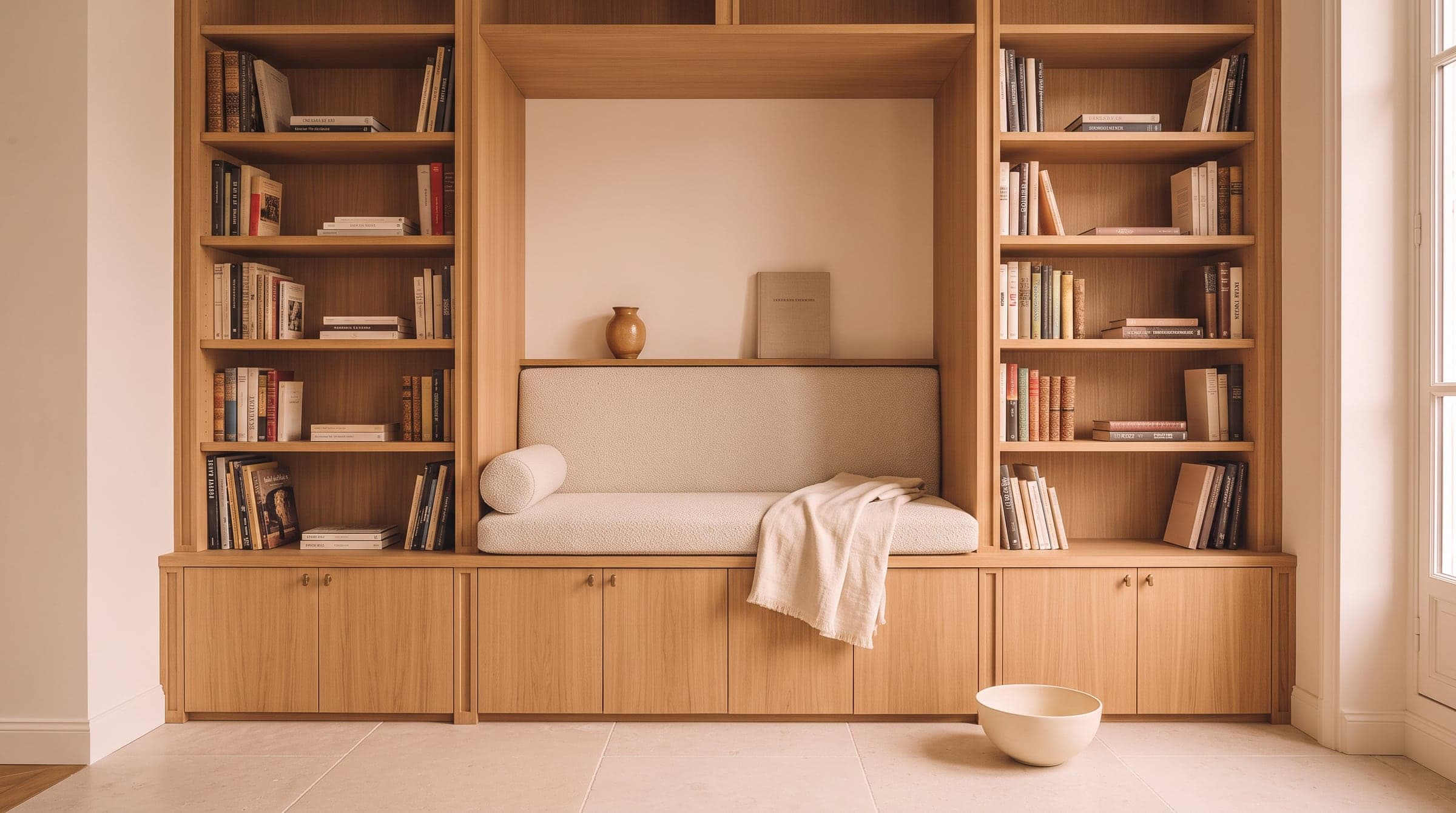
A bookcase that runs the length of a wall often has one metre spare at the end, next to a window or a chimney breast — enough for a nook without adding a single new piece of furniture. Because the alcove sits inside the same run of joinery, the seat can share the bookcase's shelving above and below it: books within reach without leaving the seat, and a closed cupboard underneath for what should stay out of sight.
The proportions of the opening decide the mood. A wider opening reads as part of the room, while a narrower one, flanked by shelving on both sides, feels closed in and separate — closer to what a reading nook is meant to be.
A bench that also stores
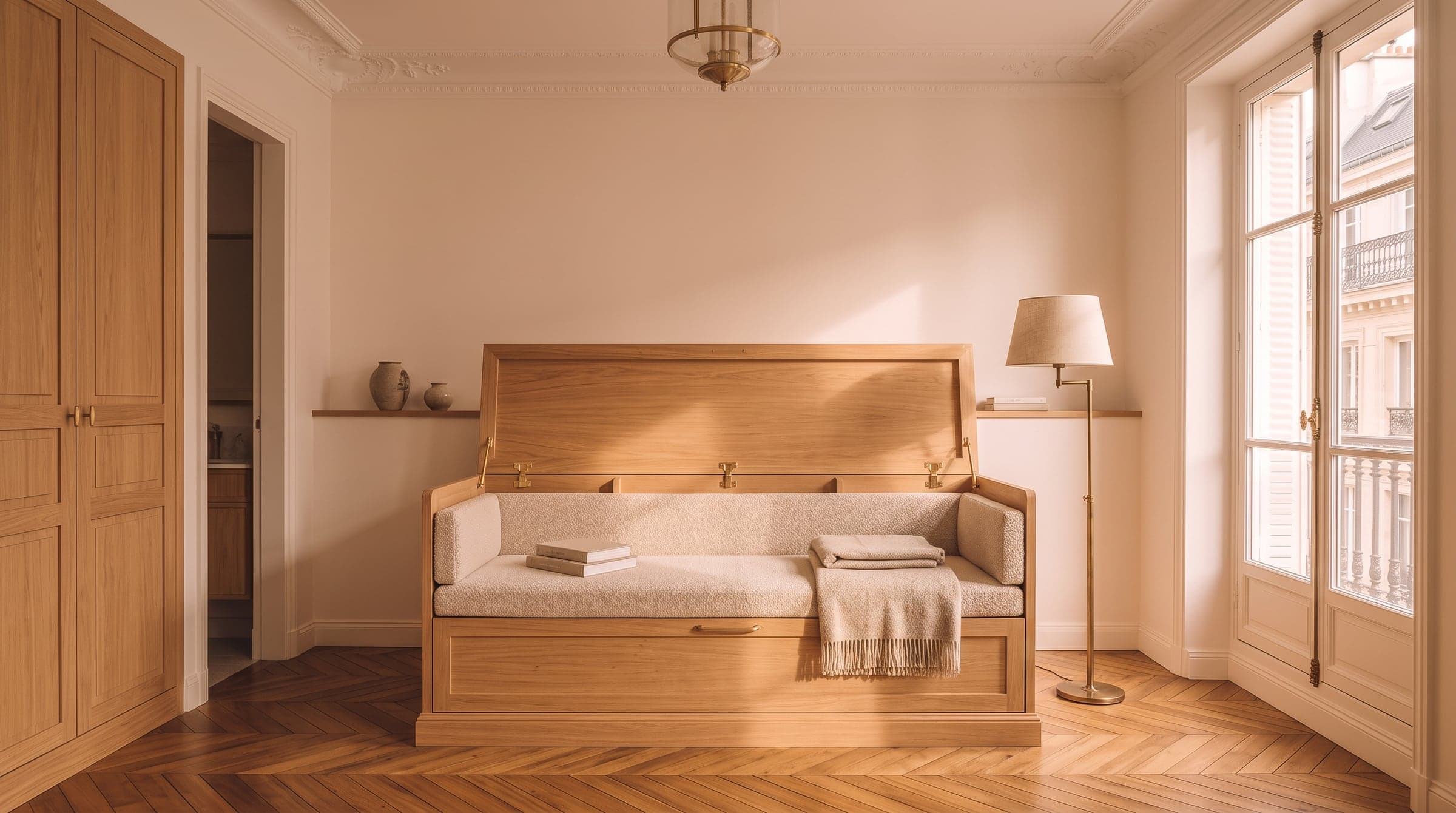
Where neither a window nor a bookcase offers a site, a freestanding bench along a bare wall does the same job with less commitment. Built with a hinged or sliding top, it stores the books, the blankets and the games that would otherwise sit on the floor, while the top itself becomes the seat.
A hinged lid needs enough clearance in front to open fully, and a seat height around 40 to 45 centimetres keeps it comfortable to sit on without a cushion adding centimetres it does not have room for. In a small bedroom or a landing, this version earns its footprint twice over, which matters in a Paris apartment where every bare metre of wall has to justify itself.
A seat this size needs its own light
An overhead ceiling light lands on the whole room, not the page. A reading nook needs a source of its own, close enough to read by without a shadow falling from the reader's own shoulder. A wall light mounted just above head height when seated, or built into the underside of a shelf above the nook, avoids both problems and keeps a lamp from taking up the little surface a nook has to spare.
A lamp resting on the sill works, but it claims room the sill rarely has, and a cable running down the front of the seat is the first thing anyone reading there will trip on. Planning the wiring for a wall light before the joinery is built means no cable is ever visible once the cushion is in place. Warm light, close to 2700 kelvin, is kinder to a page at night than the cooler tone that suits a kitchen or a bathroom.
Drawn for your window, not a catalogue photo
A reading nook copied from a photograph rarely fits the wall it lands on: the window is a different height, the bookcase runs a different length, the ceiling sits lower or higher than in the picture. This is exactly the kind of made-to-measure joinery that earns its keep in a Haussmann apartment, where a nook has to fit one wall precisely rather than an average one.
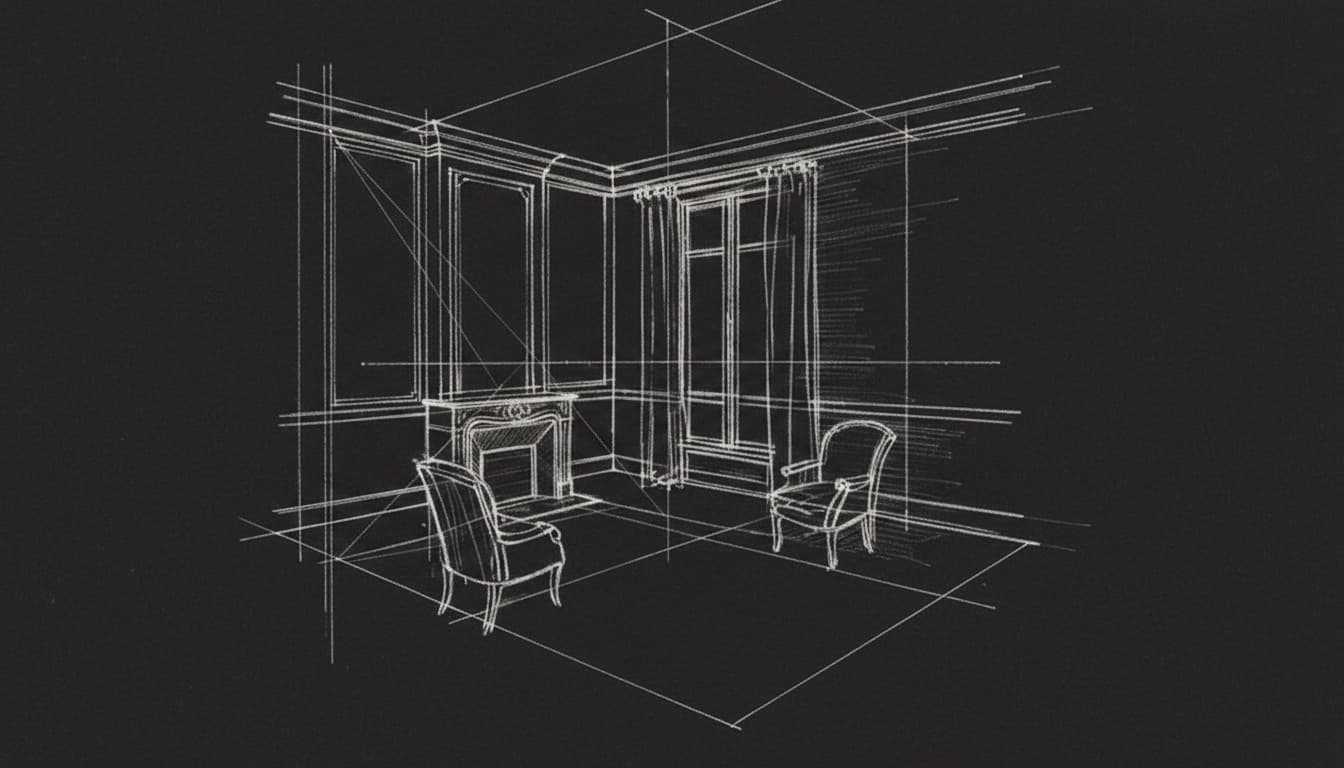
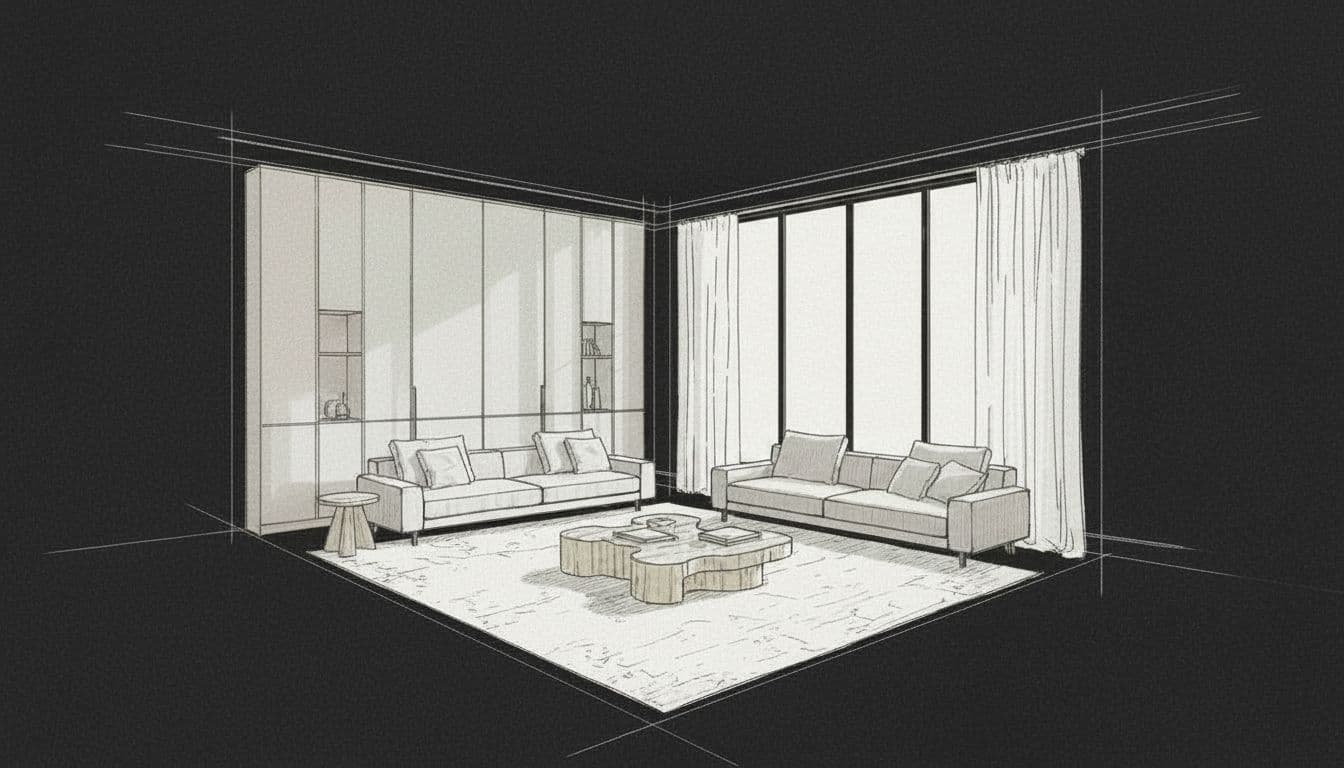
We draw perspectives of the finished seat before any joinery is cut, following the same steps as any other piece — so the depth, the backrest and the light are settled on an image, not guessed on site. Seeing how a renovation budget breaks down before choosing where a nook fits avoids finding out halfway through that the joinery line was underestimated.
FAQ
How deep should a reading nook seat be?
Around 55 to 60 centimetres works well for an adult reading at an angle, against a bolster or a low backrest. Anything under 45 centimetres suits perching rather than settling in with a book. The right figure also depends on the space available and what sits below the seat, which is why it is worth drawing rather than guessing.
Does a window seat mean moving the radiator?
Not always. Where a radiator sits under the window, the seat can sometimes be drawn around it with a vented front that keeps the heat moving into the room. Where that is not practical, moving the radiator is a detail settled at the drawing stage, before any joinery is built.
Can a reading nook fit into a small apartment?
Yes — an alcove at the end of an existing bookcase, or a freestanding storage bench along a bare wall, needs no dedicated room. Both work well in a compact Paris apartment, and the storage they add usually matters as much as the seat itself.
What kind of light suits a reading nook?
A source close to the page, not an overhead light for the whole room. A wall light at head height when seated, or one built into the underside of a shelf, keeps the light where it is needed and avoids a cable across the seat. Warm light suits reading better than a cooler, brighter tone.